NK cells kill cancer cells: Using "allogeneic" cells is more effective
TIME:2025-06-23 Views:493
In recent years, NK cell therapy, an immune cell therapy known as a "natural killer", has brought new hope to many cancer patients, especially its powerful anti-cancer ability when using "allogeneic" cells, which has attracted widespread attention.
A large meta-analysis on NK cell therapy for solid tumors was published in the international journal "Frontiers in Immunology" by a research team from the School of Public Health of the Catholic University of Korea and Sungkyunkwan University, covering 31 clinical studies and more than 600 solid tumor patients, systematically revealing the true performance of NK cell therapy in solid tumors for the first time.

Significant efficacy: the overall tumor reduction rate reached 38.4%, and the disease control rate was 72.7%
This study clearly demonstrated the overall effectiveness of NK cell therapy for a variety of solid tumors. Data showed that among the patients who received treatment, 28.2% of the patients had significantly reduced tumors, and 63.2% of the patients had their conditions effectively controlled. If we only focus on studies conducted after 2011, the efficacy is more significant, with the overall tumor reduction rate increased to 38.4% and the disease control rate as high as 72.7%. This fully demonstrates that with the continuous advancement of technology, the production process and treatment effect of NK cells have been significantly improved.
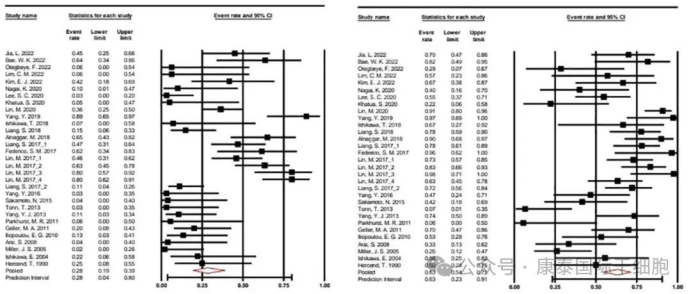
What is particularly surprising is that NK cell therapy has shown excellent results in the liver cancer patient group. More than 70% (72.3%) of patients have significantly reduced tumors, and nearly 90% (88.9%) of patients have stable or improved conditions. Researchers analyzed that this good effect may be related to the favorable immune environment of the liver itself on the one hand, and on the other hand, many patients have received "combined treatment", that is, combining NK cell therapy with local treatment methods (such as minimally invasive electroporation, arterial chemotherapy, etc.), which has played a synergistic role and achieved a "1 + 1>2" treatment effect.
High safety: ultra-low toxic side effects, almost no adverse reactions
In the field of cancer treatment, safety has always been the most concerned issue for patients and doctors. NK cell therapy performs well in terms of safety. The most common adverse reaction was only mild fatigue, accounting for 44%; the incidence of serious side effects was extremely low, for example, headaches above grade 3 accounted for only 25%, and the incidence of granulocytopenia was only 7%, and these adverse reactions could be effectively controlled. It is particularly important that cytokine release syndrome (CRS) and graft-versus-host disease (GvHD) were not observed in clinical trials, which is in sharp contrast to the safety risks of CAR-T cell therapy.
Factors affecting efficacy: allogeneic sources and short-term culture have outstanding advantages
The study also found several factors that significantly affect the efficacy of NK cell therapy:
Cell source:
The efficacy of allogeneic NK cells (derived from the umbilical cord) is significantly better than that of autologous NK cells. The efficacy of allogeneic NK cells reached 39.6%, while the efficacy of autologous NK cells was only 21.7%. This data laid a solid theoretical foundation for the research and development of "spot-type" treatment products.
Culture cycle:
When the culture time of NK cells is controlled within 2 weeks, the efficacy is as high as 38.1%; when the culture time exceeds 2 weeks, the efficacy decreases significantly. This suggests that NK cells in the "young state" are more therapeutically active.
Treatment combination strategy:
NK cells combined with local treatment, such as irreversible electroporation (IRE), electroporation, etc., can significantly improve the efficacy. The objective response rate (ORR) of the combination therapy is as high as 69.9%.
Three reasons why NK cells are more suitable for solid tumors
Why can NK cells conquer solid tumors more effectively? Experts believe that there are three main reasons:
 1. Broad spectrum of killing effect:
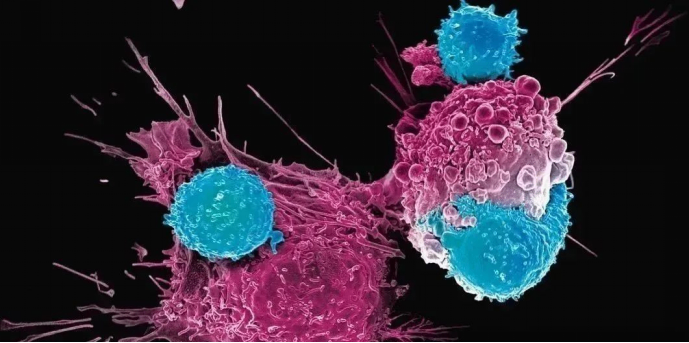
No need for pre-sensitization, can directly identify and attack a variety of solid tumor cells, and has a certain effect on a variety of solid tumors such as lung cancer, breast cancer, and liver cancer.
2. Unique recognition mechanism:
Not restricted by the major histocompatibility complex (MHC), it can judge whether the cell is abnormal through the balance of "killing activation receptors" and "inhibitory receptors", accurately identify tumor cells, and overcome the problem of tumor antigen escape.
3. Safe "universality":
Allogeneic NK cells basically have no risk of rejection, are more suitable for large-scale standardized preparation, and truly realize spot supply.
Future Outlook

This study also points out the development prospects of the next generation of NK cell therapy. CAR-NK cells (NK cells engineered to express chimeric antigen receptors) have shown stronger killing ability and good safety in early clinical studies; while iPSC-derived NK cells have high consistency and the potential for large-scale production. These advanced versions of NK cells are expected to further improve the treatment effect, increase the accessibility of treatment, and become a new trend in the treatment of solid tumors.
In short, as a "potential stock" in the field of cancer immunotherapy, the breakthrough progress of NK cell therapy has brought real hope to countless solid tumor patients. We have reason to believe that with the continuous upgrading of technology and the continuous deepening of clinical verification, spot "natural killer" NK cells will occupy a more important position in the field of cancer treatment in the future, and write a new legend for human victory over cancer.
-
Prev:No More Post